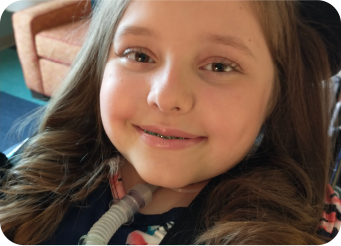
The moment a doctor tells you your child can come home is one you've been hoping for since the day they were admitted. It's also one of the most overwhelming moments a parent can face. Because coming home doesn't mean the medical complexity goes away. It means it moves with you — into your living room, your bedroom, your daily routines.
Bringing a child home on a ventilator is absolutely possible. Thousands of families do it, and many describe it as one of the most meaningful transitions of their lives. But it requires real preparation: physical, logistical, and emotional. This guide walks you through what that preparation actually looks like, so your child's first day home can truly be the first day of better days.
What Needs to Be in Place Before Your Child Comes Home
Hospitals will not discharge a ventilator-dependent child until certain conditions are met. But meeting the minimum requirements and being genuinely ready are two different things. Here is what families need to have firmly in place before discharge day.
Skilled Nursing Coverage
This is the most important piece, and it is also the most common gap. Your child will require licensed nursing care at home, often 16 or more hours per day, sometimes around the clock. Before discharge, your care team will help initiate the process of securing a private duty nursing agency, but the authorization and staffing process takes time. Start it as early as possible.
One thing many families don't realize: you are not limited to a single PDN agency. If your primary agency cannot fill all of your authorized hours, you are allowed to work with more than one agency simultaneously to cover the gaps. Too many families go without care, or with dangerous gaps in coverage, simply because they didn't know this was an option. Take all the help that is available to you.
Home Equipment and Supplies
Your child will come home with life-sustaining equipment that requires setup, maintenance, and a reliable supply chain. A durable medical equipment (DME) provider, coordinated through the hospital or your insurance, will deliver and set up the necessary devices. Standard equipment for a vent-dependent child at home typically includes:
-
A primary home ventilator
-
A backup ventilator
-
A manual resuscitation bag (also called an Ambu bag), which must be kept within arm's reach at all times
-
Suction machine and supplies
-
Tracheostomy care supplies, if applicable
-
Pulse oximeter
-
Feeding pump and supplies, if the child requires enteral nutrition
-
A hospital-grade bed or positioning equipment as needed
Your DME provider is responsible for training your family on the basic operation of each device. Your hospital nursing staff and respiratory therapist will also provide hands-on training before discharge. Do not leave the hospital until every adult caregiver in the home feels genuinely confident.
Power Backup: A Non-Negotiable
A ventilator runs on electricity. That single fact has enormous implications for where you live and how you prepare.
You need to know exactly how long your child's ventilator can run on its internal battery, and you need to know this number before you come home. Most home ventilators have a battery life of several hours, but that window can close quickly in an extended outage.
Every vent-dependent family should have one of the following in place before discharge:
-
A whole-house generator is the gold standard. It activates automatically and can sustain your home's power indefinitely with a fuel supply.
-
A portable generator or medical-grade battery backup is an acceptable interim solution, but requires that someone in the home knows how to operate it quickly and calmly under stress.
-
If you do not yet have backup power in place, contact your local fire department before your child comes home and ask to be added to their medical priority list. Most municipalities maintain a registry of residents with life-sustaining equipment so that they can be prioritized during outages and emergencies. This costs nothing and could save your child's life. Do not skip this step.
What to Do When the Ventilator Alarms
This is the piece of knowledge that every family member and every nurse in your home needs to have before care begins.
A home ventilator has many settings, many alarms, and many possible causes for each alarm. When you are tired, when it is 3 a.m., when your child looks distressed and you cannot immediately identify what is happening — the ventilator can feel like an impossible puzzle.
Here is the general sequence most families are taught to follow:
-
Suction the tracheostomy first, to try to clear any blockage.
-
If a blockage is suspected but suction doesn't clear it, change the tracheostomy tube.
-
If your child is still showing signs of distress after these steps, turn off the ventilator, begin bagging manually, and call 911.
The manual resuscitation bag delivers breaths that are more effective than what a malfunctioning or alarming ventilator can provide. It is always the safer choice if you’re in an emergency and your child is experiencing respiratory distress. This is not a last resort — it is a first response. Every caregiver in the home, and every nurse on your care team, should be practiced and comfortable with manual bagging before your child ever comes home.
Keep the bag next to your child at all times. Know where it is in every room where your child spends time. Refresh this skill regularly.
How a Skilled Nurse Prepares for a New Vent-Dependent Patient
When a new nurse is assigned to your child, a great deal of preparation happens before they ever walk through your door.
At First Day Homecare, nurses caring for trach and vent-dependent children complete our proprietary TrachBright® and VentBright® certification programs before working their first shift. This goes beyond standard licensure. TrachBright® and VentBright® training ensures that your nurse understands home ventilator management at a clinical depth, not just how to respond to alarms, but how to anticipate them, how to troubleshoot, and how to communicate changes in your child's status to the broader care team.
Before a first shift, a nurse will review your child's care plan, understand their specific ventilator settings and baseline readings, learn the location of all emergency equipment, and meet your family. At First Day, we call this the Meet and Greet, and we consider it a required part of every new care relationship. After the Meet and Greet, the nurse typically goes through additional training and/or job shadowing with other nurses in your home. The goal is that your nurse walks into that first solo shift already knowing your child and comfortable with their care.
What Families Almost Always Underestimate
Ask any parent who has brought a vent-dependent child home, and most will tell you a version of the same thing: they underestimated how much the emotional weight would shape everything else.
The clinical preparation — the equipment, the training, the nursing coverage — is concrete. You can make a list, check boxes, and feel ready. What is harder to prepare for is the experience of having medical professionals in your home around the clock, the hypervigilance that sets in every time an alarm sounds, and the grief that sometimes surfaces alongside the joy of being home. Many parents describe a strange dissonance: being so grateful and so scared at the same time.
This is normal. It does not mean you made the wrong decision. It means you love your child and you are doing something hard.
The families who navigate this transition most successfully are usually the ones who give themselves permission to ask for help — not just clinical help, but emotional support, respite, community. Connect with other families who have done this. Let your nursing team become partners, not just providers. Lean on your agency when the coverage gaps feel impossible.
You are not supposed to do this alone. And with the right team around you, you won't have to.
First Day Homecare and Vent-Dependent Children
First Day Homecare specializes in the kind of complex pediatric care that most families navigating a vent-dependent discharge will need. Our nurses complete our proprietary VentBright® and TrachBright® certification programs, ensuring clinical preparedness that goes beyond standard licensure. We coordinate directly with hospital discharge teams, DME providers, and physicians to make the transition from hospital to home as seamless as possible.
If your child is preparing for discharge and you are beginning the process of securing home nursing, we encourage you to reach out early. The sooner we can connect, the more prepared your family will be on day one.
Contact First Day to learn how we support vent-dependent children and their families from discharge day forward.