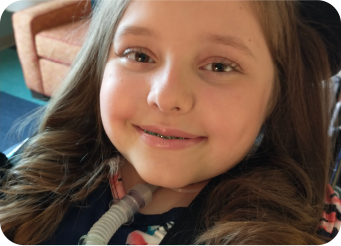
Leaving the Hospital Is a Milestone. What Comes Next Is What Matters Most.
When a family is told their medically complex child can go home, the relief is immediate. So is the fear. Because for many families, discharge day arrives with little more than a referral, a bag of supplies, and the assumption that they will figure the rest out on their own.
Some hospitals do more. Many do not. And in the gap between a discharge order and a fully supported first day at home, children end up back in the emergency room, medications go unfilled, equipment goes unmonitored, and families are left navigating one of the hardest transitions of their lives without adequate support.
A hospital-to-home transition for a medically complex child is not a single moment. It is a process that requires coordination, clinical expertise, and someone who is actively looking out for your family before, during, and after discharge day. That is what First Day is built to provide.
What Makes These Transitions So Difficult?
For families of medically complex children, the hospital has been the safety net. There are nurses down the hall, monitors at the bedside, physicians available around the clock, and a supply of everything the child needs within arm's reach. The entire environment is designed to catch problems before they become emergencies.
Things can be a little different at home.
Going home means parents become the first line of observation. It means equipment that was managed by hospital staff is now managed by a family that has been trained on it, but never truly tested. It means the physician who has known your child for months is now a phone call or a portal message away instead of a short walk down the corridor.
The transition is also logistically complex in ways that are easy to underestimate. Insurance authorizations for home nursing take time. Durable medical equipment has to be ordered, delivered, and set up. Prescriptions need to be filled before discharge, not after. Follow-up appointments with specialists need to be scheduled and kept. When any one of these pieces falls through, the consequences can be serious. Missed medications and missed appointments are among the most common drivers of preventable rehospitalization in the weeks following discharge.
Who Hospital-to-Home Transitions Affect
Medically complex children coming home from the hospital are at the heart of what First Day Homecare does. These are children on ventilators, with tracheostomies, feeding tubes, and complex medication regimens, whose parents are learning to manage clinical care at home, often for the first time.
Children in foster care represent a population that is particularly vulnerable during transitions of care. Medically complex children in the foster system sometimes move from foster home to foster home, and they often arrive with foster parents who have not been adequately trained to manage their specific care needs. A change in caregiver without proper clinical handoff is a genuine safety risk, and it is a situation First Day Homecare is committed to addressing.
Older adults moving from skilled nursing facilities or rehabilitation centers back to a home setting also navigate significant transitions of care, with their own set of clinical and logistical challenges.
Hand-in-Hand Transitions®
First Day's Community Program
First Day Homecare® believes that safe transitions of care should not be limited to families who are already connected to a nursing agency. That is why First Day franchises offer Hand-in-Hand Transitions®, a complimentary transition support program available to any family in the community navigating a major change in care.
This is a one-time in-home visit conducted by a registered nurse or, where clinically appropriate, a respiratory therapist. The focus is high-level safety: making sure new caregivers understand the most critical aspects of the child's care, know what to watch for, and know how to respond if something goes wrong. Our clinician works through a structured safety checklist tailored to the individual's needs and spends time teaching the caregivers who will be present in the home.
The visit is free. There is no obligation. First Day Homecare is available for ongoing support should their needs grow beyond what a single visit can address.
For foster families receiving a medically complex child, this program is especially meaningful. Many foster parents are caring, committed individuals who simply have not been given the clinical knowledge they need to keep a medically fragile child safe. Hand-in-Hand Transitions® exists to change that.
What Families Most Often Ask
-
"How much will this cost?" Hand-in-Hand Transitions® visits are free of charge. For families who need ongoing care and support, First Day Homecare helps families understand their coverage and navigate the authorization process from the beginning so that cost does not become a barrier to receiving care.
-
"Who will be in my home?" Families want to know that the person caring for their child is qualified, vetted, and trustworthy. Nurses at First Day who care for trach and vent-dependent children complete our proprietary TrachBright® and VentBright® certification programs. Every nurse is licensed, background-checked, and introduced to the family through our Meet and Greet before their first shift begins.
-
"What if my agency can't fill all of my hours?" This is one of the most important things for families to understand before discharge: you are not limited to a single PDN agency. If your primary agency cannot fill your authorized nursing hours, you are allowed to work with more than one agency simultaneously to cover the gaps. Too many families go without care because they simply did not know this was an option. First Day Homecare is often the agency that steps in to fill the hours other providers cannot cover.
What First Day Does Differently
When a child is discharged with nothing more than a referral, the family is essentially on their own until nursing care begins. That gap, even if it is only a few days, carries real risk.
First Day works to ensure that a nursing team is already in place before a child comes home, not arranged in the days after. Our team coordinates directly with hospital discharge planners during the pre-discharge period so that caregivers are prepared, schedules are built, and families are not starting from zero on the day their child walks through the door.
We are also available to check in and provide support in those early days at home, because we understand that discharge day is not the finish line. It is the starting line.
Contact First Day Homecare to learn more about our transition support and how we help families move from hospital to home with confidence.